
I cannot tell you how many homes I have walked into where a $300 cat tree sits untouched in a corner while the cat balances on the back of a sofa or shreds an armchair. The issue is rarely the furniture itself.
Cats organize their world in three dimensions. They map sightlines, escape routes, thermal comfort, and human movement patterns long before they choose a resting spot. When furniture placement ignores those variables, cats default to architecture instead.
This guide breaks down strategic placement room by room, grounded in behavioral science and real-world behavior. You will learn how to position vertical structures, scratching zones, and retreat spaces based on feline spatial psychology.
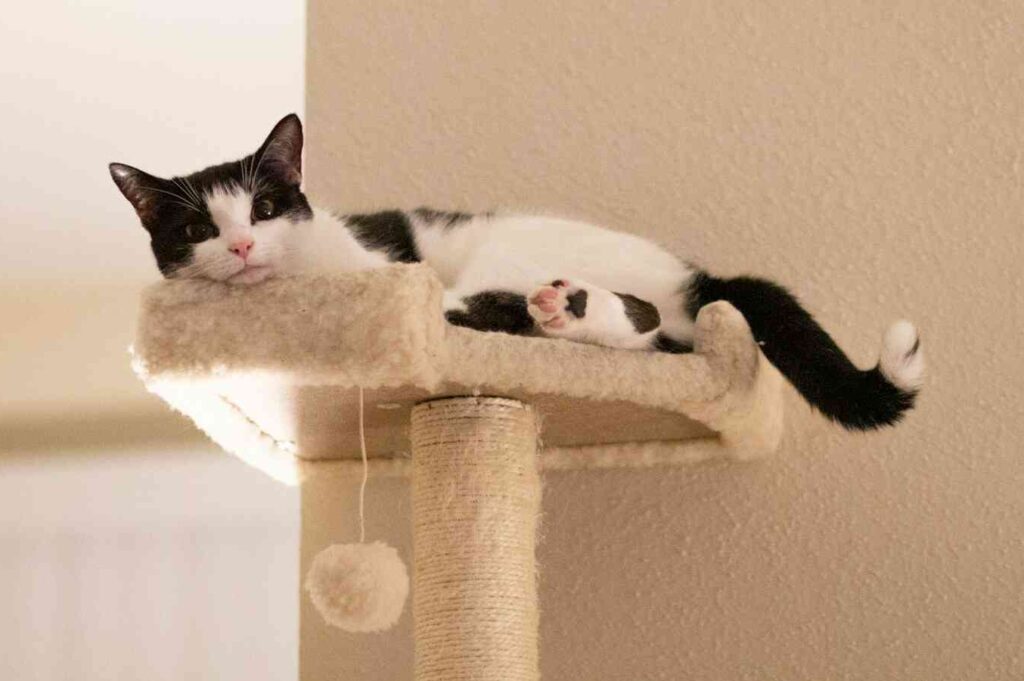
Your Cat’s Environmental Needs
Cats require five essential resources in their living space: feeding stations, water sources, toileting areas (litter boxes), resting/sleeping places, and opportunities for environmental enrichment.
When it comes to furniture placement, we’re primarily concerned with resting spots and enrichment. Cats have evolved as both predators and prey, which influences their preferences for:
- Vertical space: Heights provide safety and vantage points for territorial surveillance
- Hidden retreats: Enclosed spaces for security and stress reduction
- Observation posts: Perches that allow monitoring of household activities
- Territory markers: Scratching surfaces that serve both physical and psychological needs
A study by Vitale Shreve et al. (2017) found that cats prefer cognitive enrichment (opportunities to hunt, explore, and problem-solve) even over food in some cases, highlighting how important proper environmental setup is for feline mental health.
Living Room: Cat-Friendly Social Space
The living room is typically where families spend most of their time, making it prime real estate for your cat’s furniture.
Best Placements:
- Cat Tree Position: Place taller cat trees in corners or against walls near windows, but not directly in high-traffic pathways. This gives cats security (solid backing) with a view of both the outdoors and room activities.
- Scratching Posts: Position these near entry points to rooms or near furniture cats might otherwise scratch. Research by Ellis et al. (2013) indicates cats often scratch when transitioning between spaces or during greeting behaviors.
- Cat Shelving or Wall Perches: Install these to create “cat highways” around the perimeter of the room, especially if floor space is limited. Mount shelves at varying heights to create interesting pathways.
- Window Hammocks: In living rooms with large windows, these provide both comfortable lounging and entertainment value without taking up floor space.
- Hidden Retreats: Incorporate cave-style beds underneath side tables or tucked beside sofas for cats who need occasional breaks from social activity.
Pro Tip: Position at least one resting spot where your cat can observe family activities without being in the middle of them. Many cats prefer to participate passively in social settings. If your cat seems disinterested in their furniture, it might be one of the signs your cat might be bored that indicate they need better environmental enrichment.
Bedroom: Peaceful Coexistence
Bedrooms serve as important secondary territories for cats, especially in multi-cat households where they may need escape spaces.
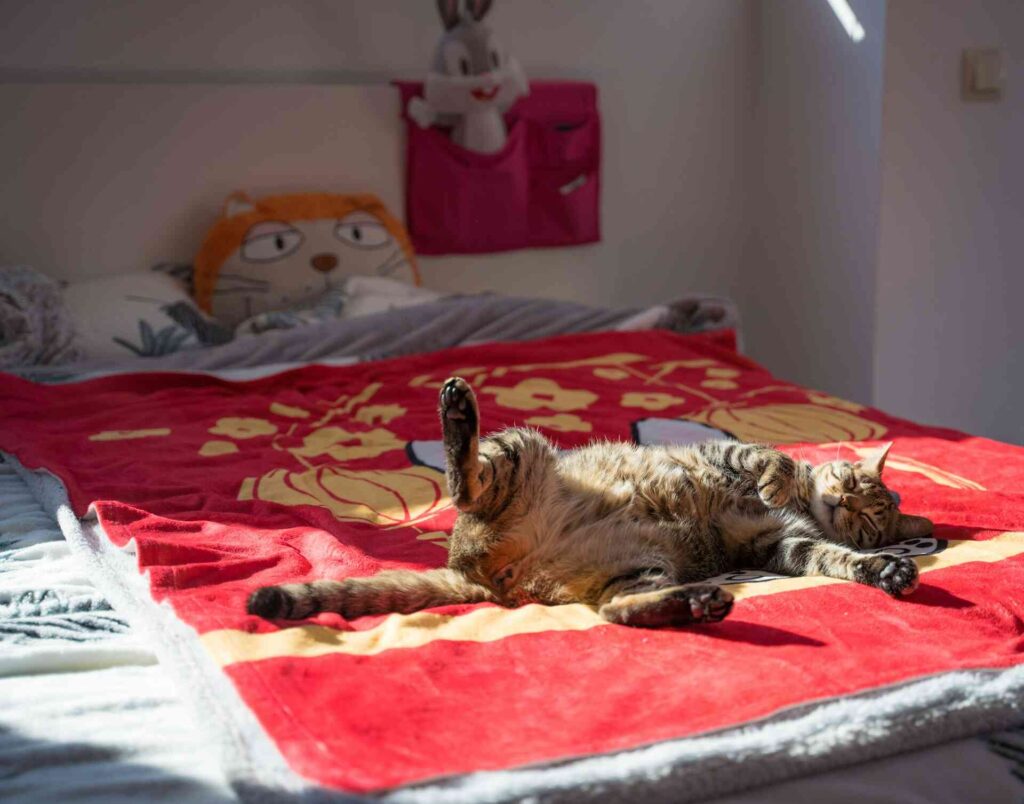
Best Placements:
- Window Perches: If your bedroom has a good view, a window perch provides entertainment while you’re away and morning stimulation when you’re sleeping in.
- End-of-Bed Furniture: Low cat furniture at the foot of the bed offers proximity without disrupting sleep. Look for options that blend with your bedroom decor.
- Nightstand Adjacent: A medium-height cat tree next to a nightstand creates a step-up approach to the bed for elderly cats while giving them their own space.
- Under-Bed Retreats: The space beneath beds is naturally appealing to cats. Consider slide-out cat drawers or specially designed under-bed hideaways if you want to keep this area clean.
Pro Tip: If your cat consistently wakes you up too early, try placing interactive toys and feeding puzzles far from the bed before going to sleep. This redirects early morning energy away from your sleeping form.
Home Office: Work-From-Home with Cats
Remote work has changed how cats and humans share space. Strategic furniture placement in home offices can reduce Zoom call interruptions while keeping your cat contentedly nearby.
Best Placements:
- Desk-Adjacent Perch: Position a cat tree or shelf where your cat can observe you working without walking across your keyboard. The ideal height puts them at or slightly below your seated eye level.
- Window Station: If possible, create a dedicated cat space by a window within your sightline but away from your immediate workspace.
- Document Box Alternative: Place a shallow box or cat bed on a portion of your desk for those cats determined to be in your workspace. This designated spot can reduce paper-shuffling and keyboard-walking.
- Behind-Chair Retreat: Some cats prefer to be near you but hidden. A small cat cave behind your chair satisfies this need without taking valuable office space.
Pro Tip: In video conference-heavy jobs, position cat furniture so that when your cat inevitably appears, they’re in frame rather than walking across your keyboard or blocking the camera.
Kitchen and Dining Areas: Safety First
Kitchens present unique challenges with hot surfaces, sharp objects, and enticing food smells. However, cats often want to be where the action is.
Best Placements:
- Elevated Observation Post: Place a cat shelf or small tree just outside but within view of the kitchen, giving them a safe vantage point to watch cooking activities.
- Dining Room Perimeter: For cats who begrudgingly respect boundaries, place cat trees or window perches along the dining room perimeter rather than near the table itself.
- Breakfast Nook Companion: If you have a breakfast nook or kitchen seating area, position a cat-friendly perch nearby but away from food preparation surfaces.
Pro Tip: Avoid placing cat furniture near stoves, cutting board areas, or places where hot liquids might be carried. The goal is to satisfy their social needs while keeping them safely out of cooking zones. And while we’re talking about food safety, check out our guide on how often to clean your cat’s food & water bowls to keep your kitty’s dining experience hygienic.
Windows and Outdoor Views: The Ultimate Cat TV
Window access activates the predatory motor sequence: orient, stalk, chatter, pounce attempt. Even when the hunt cannot be completed, the neurological stimulation matters.
Best Placements:
- Bird-Watching Windows: Prioritize windows with views of bird feeders, trees, or active wildlife areas. Position cat trees or perches to allow comfortable long-term viewing.
- Sun-Tracking Setup: If possible, create multiple window stations throughout your home so cats can follow sunbeams throughout the day.
- Safe Window Access: Ensure window perches are securely attached and that windows have proper screens or safety features to prevent falls or escapes.
- Multi-Level Viewing: For ultimate enrichment, create a graduated approach to window views with steps or platforms at varying heights.
Pro Tip: For apartments with limited window access, consider setting up a bird feeder or plant container outside your window to attract wildlife. Even urban settings can become more stimulating with the right outdoor enhancements.
Multi-Cat Households: Managing Shared Spaces
Cats are not naturally social with non-family members, making multi-cat households particularly challenging. Environmental complexity with adequate vertical and horizontal space helps reduce aggression between cats living together.

Best Placements:
- Multiple Territories: Create separate but equal cat stations in every major room, ideally one per cat plus one extra.
- Vertical Separation: Position cat furniture at varying heights to allow natural hierarchy expression without conflict.
- Escape Routes: Never create dead-ends where one cat can trap another. Always ensure multiple pathways for retreat and access.
- Resource Separation: Keep food, water, litter boxes, and prime resting spots separated to reduce resource guarding.
- Line of Sight Management: In tense relationships, position furniture so cats can choose whether to see each other or not.
Pro Tip: Watch for furniture “claiming” and rotation use. Some cats may timeshare desirable spots rather than share simultaneously. This is normal and should be supported with adequate alternatives.
Dos and Don’ts
| Placement Factor | Recommended | Not Recommended | Why It Matters |
|---|---|---|---|
| Height | Varied heights allowing both ground-level and elevated options | Only floor-level options | Cats need vertical space for security and territorial satisfaction |
| Window Access | Near windows with interesting views | Away from all windows | Visual enrichment reduces boredom and stress behaviors |
| Traffic Flow | Along room perimeters or in quiet corners | In the middle of high-traffic pathways | Cats prefer to observe without being stepped over or startled |
| Temperature | Areas with good sunlight or comfortable temperatures | Near drafts, vents, or temperature extremes | Cats seek thermal comfort; will abandon furniture in uncomfortable areas |
| Social Distance | Mix of locations near family activities and quiet retreat areas | Only in isolated areas or only in busy areas | Cats need options for both socialization and privacy |
| Stability | Secured to walls or with wide, stable bases | Wobbly or easily tipped furniture | Unstable furniture creates anxiety and will be avoided |
| Material Variety | Mix of scratching surfaces (sisal, carpet, cardboard) | Single-texture options only | Different scratching materials satisfy different needs |
Frequently Asked Questions
Q: How high should cat trees and shelves be?
A: Ideally, cat trees should be tall enough for your cat to fully stretch vertically when scratching (typically 3+ feet). For perches and observation posts, heights of 4-6 feet are typically preferred by cats, though individual preferences vary. For elderly cats or those with mobility issues, provide graduated access with steps no more than 6-12 inches apart.
Q: My cat ignores the expensive furniture I bought. What am I doing wrong?
A: Location is often the issue. Try moving the furniture to a spot with better social or window views. Alternatively, the texture or stability might not meet your cat’s preferences. You can encourage use by applying catnip, placing treats on the furniture, or playing games that incorporate the new piece.
Q: How much cat furniture do I really need?
A: The American Association of Feline Practitioners recommends at a minimum:
- One resting place per cat plus one extra
- Multiple scratching surfaces of different materials
- Both horizontal and vertical options
In practical terms, this typically means 2-3 pieces of furniture for one cat, and an additional 1-2 pieces for each additional cat.
Q: Can I move cat furniture once my cat gets used to it?
A: Cats are creatures of habit and may be stressed by furniture relocation. If you need to move pieces, do so gradually (a few inches per day) or use positive reinforcement to help them accept the new location. Always ensure the new spot provides similar benefits to the previous location.
Q: How do I prevent my cat furniture from looking tacky?
A: Today’s market offers many aesthetically pleasing options that complement home decor. Look for furniture in materials and colors that match your existing decor, or consider custom pieces that serve dual functions. Wall-mounted options often have less visual impact than floor units while providing the same benefits to cats.
Final Thoughts
Furniture placement is a form of behavior modification. Every perch, post, and hideaway either supports or competes with instinct.
When cats choose countertops, laundry baskets, or armrests, it reveals gaps in environmental design. Pay attention to the architectural features they select. Consider height, warmth, visibility, and proximity. Then, intentionally replicate those variables.
The fastest behavioral improvements I observe do not result from purchasing additional products, but from repositioning existing items. When the spatial layout aligns with feline instincts, scratching decreases, social tension softens, and the home feels calmer, without a single training session.
Looking for more? Explore our Cat Furniture section for more tips like this, visit the Blog for fun and insightful reads, or browse our full Cat Category for everything feline-related, from care to comfort.
Disclaimer: This article is for informational purposes only and does not substitute for professional veterinary advice. Always consult your veterinarian for diagnosis and treatment tailored to your cat’s individual needs. Please verify current product information directly on the retailer’s site before purchasing.
References
- Dantas, L. M. S., Delgado, M. M., Johnson, I., & Buffington, C. T. (2016). Food puzzles for cats: Feeding for physical and emotional wellbeing. Journal of Feline Medicine and Surgery, 18(9), 723–732. https://doi.org/10.1177/1098612X16643753
- Ellis, S. L., Rodan, I., Carney, H. C., Heath, S., Rochlitz, I., Shearburn, L. D., Sundahl, E., & Westropp, J. L. (2013). AAFP and ISFM feline environmental needs guidelines. Journal of Feline Medicine and Surgery, 15(3), 219–230. https://doi.org/10.1177/1098612X13477537
- Foreman-Worsley, R., & Farnworth, M. J. (2019). A systematic review of social and environmental factors and their implications for indoor cat welfare. Applied Animal Behaviour Science, 220, 104841. https://doi.org/10.1016/j.applanim.2019.104841
- International Cat Care. (2022). Creating a cat friendly home. https://icatcare.org/articles/making-your-home-cat-friendly
- Stanton, L. A., Sullivan, M. S., & Fazio, J. M. (2015). A standardized ethogram for the felidae: A tool for behavioral researchers. Applied Animal Behaviour Science, 173, 3-16. https://doi.org/10.1016/j.applanim.2015.04.001
- Vitale Shreve, K. R., Mehrkam, L. R., & Udell, M. A. R. (2017). Social interaction, food, scent or toys? A formal assessment of domestic pet and shelter cat (Felis silvestris catus) preferences. Behavioural Processes, 141, 322–328. https://doi.org/10.1016/j.beproc.2017.03.016
- Zhao ZD, Zhang L, Xiang X, Kim D, Li H, Cao P, Shen WL. Neurocircuitry of Predatory Hunting. Neurosci Bull. 2023 May;39(5):817-831. https://doi.org/10.1007/s12264-022-01018-1
Check out our most recent articles!
- How Are Cats so Flexible? Your Cat’s Anatomy Explained
 Between their 53 vertebrae, muscular shoulders connected only by soft tissue, and elastic joints, cats possess anatomical superpowers that blur the line between solid and liquid, letting them navigate spaces you’d swear were too small.
 - Do Cats Copy Their Owners Voice, Personality and Actions?The independent cat stereotype is crumbling. Science reveals that cats engage in intentional mimicry, learning from their owners and adapting their personalities to match the humans they live with.
- Are Newborn Cats Born With Teeth? Everything About Kitten Dental GrowthEver wondered what’s happening inside a newborn kitten’s mouth? The answer might surprise you. Discover the complete timeline of feline dental development and learn what to expect as your kitten grows from gummy grins to a full set of adult teeth.
- Keeping Your Indoor Cat Warm in Winter: The Complete GuideEven indoor cats feel the winter chill more than you might think. Cold floors, dry air, and sneaky drafts can leave your feline less comfortable than they should be. Discover the simple adjustments that make all the difference in helping your cat stay genuinely cozy through the coldest months.
- Should You Look Your Cat in the Eyes? Is Staring Really Aggressive?Your cat’s eyes tell a story you’ve been misreading. While prolonged staring means one thing in human communication, cats interpret it completely differently. Discover why that loving gaze might actually be stressing out your feline friend and what to do instead.
- Choosing the Best Blanket for Your Cat: A Blanket Buyer’s GuideFinding the best blanket for your cat means considering more than just softness. Temperature regulation, durability, washability, and even behavioral quirks all play a role in choosing the perfect cozy spot for your feline friend. Discover which blanket types match your cat’s lifestyle.
- How to Get Your Kitten to Eat More: Simple Solutions for Picky EatersWatching your tiny kitten turn up their nose at perfectly good food can be heart-wrenching. This comprehensive guide reveals why kittens become picky eaters and shares practical solutions that transform mealtime battles into successful feeding routines.
- Can Cats Eat Fried Rice? Why This Takeout Favorite Is a No-GoThat irresistible takeout aroma might have your cat begging, but fried rice contains ingredients that can harm felines. Discover why even small amounts aren’t worth the risk and what treats truly suit your cat’s carnivorous nature.
- Why Do Cats Vibrate Their Tail? From Happy to HuntingYour cat’s vibrating tail is like a mood ring with fur. Whether they’re thrilled to see you or preparing to mark territory, decoding these rapid shakes reveals what’s really going on in their mind.
- Is Asparagus Bad for Cats? Risks, Benefits, and AlternativesYour cat’s eyeing your asparagus dinner, but should they have any? While this green veggie isn’t toxic to cats, there are surprising reasons why it’s not the treat you might think it is.
- How Cats Express Sadness: Reading Your Feline’s Emotional LanguageCats don’t cry emotional tears or mope around like dogs, but they absolutely experience sadness. The trick is learning to read their subtle language, the withdrawn behavior, the changed routines, the slight shifts in body posture that reveal their inner emotional world.
- Can Cats and Rabbits Live Together? Multi-Species Harmony GuideCats are predators, rabbits are prey, but that doesn’t mean they can’t coexist peacefully. Success comes down to understanding each animal’s instincts, respecting their boundaries, and taking introductions at the right pace.
- Are Space Heaters Safe for Cats? Keeping Your Cat CozySpace heaters can provide cozy warmth for your cat, but only when chosen and positioned with feline safety in mind. Discover which features protect against burns, fires, and electrical hazards.
- Cat Bed Placement 101: Finding the Perfect Spot Your Cat Will Actually UseCats spend up to 16 hours sleeping daily, yet many reject their designated beds completely. The problem isn’t pickiness, it’s placement. Learn where cats naturally feel safe and comfortable, and how to position beds they’ll genuinely use.
- Can a Kitten Be Left Alone at Night? What You Need to KnowThose first nights with a new kitten rarely match the peaceful scene you imagined. Learn why most kittens can sleep alone once they reach a certain age, and discover the setup secrets that make nighttime independence work for everyone.















Written by Fenton Harberson (Scientific Writer and Digital Asset Planner)
Last reviewed and edited on 03.03.2026