
“Dogs come when they’re called; cats take a message and get back to you later.” This classic joke captures the playful stereotypes about pet lovers. But is there real science behind the idea that dog people and cat people have distinct personalities?
Spoiler alert: Yes.
From dating profiles to workplace icebreakers, the “dog person vs. cat person” question is a cultural staple. But beyond the memes and coffee mug slogans, psychologists have uncovered fascinating links between our pet preferences and our deepest personality traits. Over the past decade, studies have revealed that dog lovers and cat lovers differ in everything from social habits to creativity, and even how they view the world.
In this article, we’ll dive into three insightful studies to uncover:
- Key personality differences between dog and cat people.
- Why gender plays a surprising role in pet preferences.
- How understanding these traits can improve your bond with pets and even reduce shelter surrenders.
Let’s settle the age-old debate, with data!
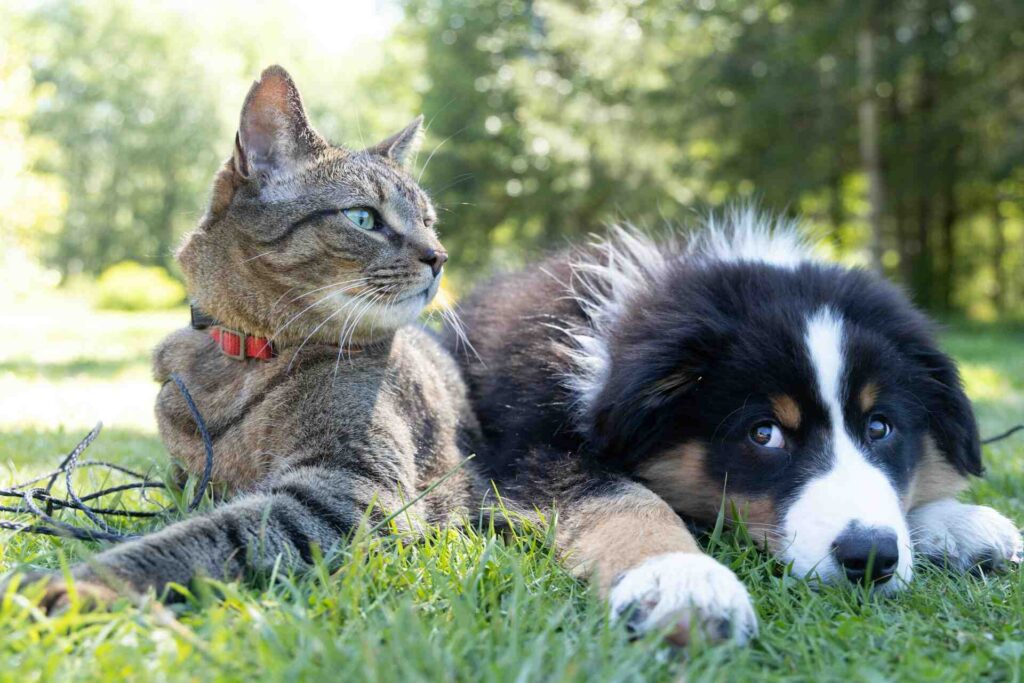
The Science Behind Pet Preferences: What Researchers Discovered
Study 1: Dominance and Competitiveness (Alba & Haslam, 2015)
Ever wonder why dog lovers often seem like natural leaders? This study tested whether dog people score higher on traits tied to dominance and hierarchy. Researchers hypothesized that dogs, being more submissive and eager to please, would appeal to individuals who thrive in structured, authority-driven environments.
Key Findings:
- Dog people scored higher in social dominance orientation (SDO), a preference for social hierarchies where some groups “lead” and others “follow.” Think of it as the personality trait that makes someone say, “There should be a clear pecking order.”
- Dog people also scored higher in competitiveness, enjoying the thrill of outperforming others.
- However, dog and cat people showed no differences in narcissism or everyday assertiveness.
Takeaway: Dog lovers may gravitate toward pets that mirror their desire for structure and loyalty, while cat lovers prefer companions that embody independence.
Study 2: The Big Five Personality Traits (Gosling et al., 2010)
This landmark study analyzed 4,565 participants using the Big Five model, the gold standard for measuring personality. The results painted a vivid picture of how dog and cat people navigate the world:
| Trait | Dog People 🐶 | Cat People 🐱 |
|---|---|---|
| Extraversion | Higher ➔ Social butterflies | Lower ➔ Quiet thinkers |
| Agreeableness | Higher ➔ Team players | Lower ➔ Skeptical soloists |
| Conscientiousness | Higher ➔ Planner pros | Lower ➔ Go-with-the-flow |
| Neuroticism | Lower ➔ Chill vibes | Higher ➔ Emotionally tuned-in |
| Openness | Lower ➔ Tradition lovers | Higher ➔ Creative explorers |
Takeaway: Dog lovers are outgoing, dependable, and love routines. Cat lovers? They’re creative, introspective, and unafraid to question the status quo.
Study 3: Narrow Traits and Gender Differences (Guastello et al., 2017)
This study zoomed in on 16 nuanced personality factors (e.g., warmth, abstract thinking) to reveal even deeper distinctions.
Key Findings:
- Dog people: Scored higher in warmth (friendliness), liveliness (enthusiasm), rule-consciousness (respect for structure), and social boldness (comfort in crowds).
- Cat people: Excelled in abstract thinking (imagination), self-reliance (independence), and emotional sensitivity (empathy).
- Gender twist:
- Men who valued rules and order strongly preferred dogs.
- Women with high reasoning skills (linked to creativity) leaned toward cats.
Takeaway: Personality differences go far beyond “introvert vs. extrovert.” Even traits like intellectual curiosity shape whether you’ll bond with a Golden Retriever or a Siamese.
Key Personality Differences: Breaking It Down

1. Social Butterflies vs. Lone Wolves
- Dog people are the life of the party. Their high extraversion means they thrive on social interaction, whether it’s chatting at the dog park or organizing a puppy playdate. Their agreeableness makes them empathetic listeners, which is why dogs (and humans!) find them so approachable. You’re the friend who texts, “Let’s meet at the dog-friendly café!”
- Cat people cherish solitude. Their openness to experience drives them to explore art, philosophy, or niche hobbies, often in the company of a cat who’s equally content to do their own thing. You’re the one who cancels plans to binge-watch documentaries with your cat.
2. Rule-Followers vs. Free Spirits
- Dog people’s conscientiousness isn’t just about keeping a tidy home, it’s about creating routines that benefit their pets like strict walk schedules, obedience training, and portion-controlled meals. As a dog owner you may have a color-coded pet schedule.
- Cat people’s lower rule-consciousness reflects their “live and let live” philosophy. They’re less likely to stress over a cat ignoring commands or knocking over a vase. As one study participant joked, “Cats don’t have owners; they have roommates.” Your cat’s “schedule” is a mystery, and you’re okay with that.
3. Anxiety and Emotional Sensitivity
- Cat people’s higher neuroticism doesn’t mean they’re unstable, it suggests they’re deeply empathetic and attuned to emotional nuances. This makes them excellent at reading their cat’s subtle cues (e.g., a flick of the tail or a slow blink). You may notice when your cat’s purr sounds “off” and immediately book a vet visit.
- Dog people’s lower neuroticism aligns with their relaxed, optimistic outlook. They’re less likely to dwell on stressors, which is why they can laugh off a chewed-up shoe. Your dog destroys the couch, and you shrug, “Guess we needed a new one anyway!”
Gender Differences
- Men: Rule-conscious men often prefer dogs, possibly because they align with traditional “masculine” traits like leadership. However, men who scored high in emotional sensitivity were more likely to prefer cats, a finding that challenges stereotypes about male pet owners.
- Women: Intellectual, independent women (with high reasoning scores) gravitated toward cats. This aligns with cats’ reputation as “feminine” pets, though the study emphasizes it’s about personality, not gender norms.
Why This Matters for Pet Owners
- Better Matches, Happier Pets
Adopting a pet that aligns with your personality leads to a stronger bond. For example:- High-energy, outgoing owners → Border Collies or Labradors.
- Creative, introverted owners → Independent cats like Russian Blues or Maine Coons.
- Reducing Shelter Surrenders
Many pets end up in shelters due to mismatched lifestyles. A conscientious, active person might struggle with a lazy cat, while a free-spirited artist might feel overwhelmed by a high-maintenance dog. - Improving Animal-Assisted Therapy
Hospitals and therapy centers could tailor interventions based on personality. An extroverted patient might heal better with a playful Lab, while an anxious patient could benefit from a calm, intuitive cat. - Strengthening Human-Animal Bonds
Understanding your personality helps you interpret your pet’s behavior more effectively. For example: Dog people’s rule-conscious nature makes them great at training and setting boundaries. Cat people’s emotional sensitivity helps them decode subtle feline cues (like tail flicks or ear twitches).
This mutual understanding deepens trust and reduces frustration.
Myths About Dog and Cat People
- Myth: Cat people are antisocial.
Truth: They’re selective about socializing, prioritizing deep connections over small talk. (Study: Cat people score high in openness, which correlates with curiosity about others.) - Myth: Dog people are control freaks.
Truth: Their conscientiousness helps them create safe, structured environments, ideal for pack-oriented pets. - Myth: Cat lovers are “weird.”
Truth: Their creativity and open-mindedness make them innovators. Ever heard of the “Crazy Cat Lady” trope? Time to retire it. - Myth: Dog people are less intelligent.
Truth: One study found cat people scored slightly higher in reasoning, but dog people excelled in practical intelligence (e.g., problem-solving during training). Both groups have different types of smarts.
Conclusion: Embrace Your Pet Persona
Your pet preference is more than a quirky trait, it’s a reflection of how you navigate relationships, handle stress, and express creativity. Whether you’re a dog person who thrives on camaraderie or a cat person who treasures independence, there’s no “better” type, just different ways to experience love and companionship.
Looking for more? Visit the Blog for more fun and insightful reads, or browse our full Cat Category for everything feline-related, from care to comfort (Dogs coming soon too!).
References
- Alba, B., & Haslam, N. (2015). Dog people and cat people differ on dominance-related traits. Anthrozoös.
- Gosling, S. D., Sandy, C. J., & Potter, J. (2010). Personalities of self-identified dog people and cat people. Anthrozoös.
- Guastello, A. D., Guastello, D. D., & Guastello, S. J. (2017). Personality differences between dog people and cat people. Human-Animal Interaction Bulletin.
Check out our most recent articles!
- Can Cats Eat Green Peas? Safe, Healthy, or Just a Skip?
 A pea rolling across the kitchen floor is basically a free cat toy and a snack in one. But before it becomes a habit, here’s what you should know about what those little green things actually do for (or to) your cat.
 - Are Spray Bottles Bad for Cats? Reasons & AlternativesA spray bottle might stop your cat’s counter-surfing today, but it’s teaching them something much more troubling: that you’re unpredictable and potentially dangerous. Discover what really happens when you spray your cat and the alternatives that actually create lasting change.
- How Are Cats so Flexible? Your Cat’s Anatomy ExplainedBetween their 53 vertebrae, muscular shoulders connected only by soft tissue, and elastic joints, cats possess anatomical superpowers that blur the line between solid and liquid, letting them navigate spaces you’d swear were too small.
- Do Cats Copy Their Owners Voice, Personality and Actions?The independent cat stereotype is crumbling. Science reveals that cats engage in intentional mimicry, learning from their owners and adapting their personalities to match the humans they live with.
- Are Newborn Cats Born With Teeth? Everything About Kitten Dental GrowthEver wondered what’s happening inside a newborn kitten’s mouth? The answer might surprise you. Discover the complete timeline of feline dental development and learn what to expect as your kitten grows from gummy grins to a full set of adult teeth.
- Keeping Your Indoor Cat Warm in Winter: The Complete GuideEven indoor cats feel the winter chill more than you might think. Cold floors, dry air, and sneaky drafts can leave your feline less comfortable than they should be. Discover the simple adjustments that make all the difference in helping your cat stay genuinely cozy through the coldest months.
- Should You Look Your Cat in the Eyes? Is Staring Really Aggressive?Your cat’s eyes tell a story you’ve been misreading. While prolonged staring means one thing in human communication, cats interpret it completely differently. Discover why that loving gaze might actually be stressing out your feline friend and what to do instead.
- Choosing the Best Blanket for Your Cat: A Blanket Buyer’s GuideFinding the best blanket for your cat means considering more than just softness. Temperature regulation, durability, washability, and even behavioral quirks all play a role in choosing the perfect cozy spot for your feline friend. Discover which blanket types match your cat’s lifestyle.
- How to Get Your Kitten to Eat More: Simple Solutions for Picky EatersWatching your tiny kitten turn up their nose at perfectly good food can be heart-wrenching. This comprehensive guide reveals why kittens become picky eaters and shares practical solutions that transform mealtime battles into successful feeding routines.
- Can Cats Eat Fried Rice? Why This Takeout Favorite Is a No-GoThat irresistible takeout aroma might have your cat begging, but fried rice contains ingredients that can harm felines. Discover why even small amounts aren’t worth the risk and what treats truly suit your cat’s carnivorous nature.